
Monthly Archives: October 2012
Actually
Mark said
If the idea is that students should learn to ignore bits that don’t matter, is there a case for focusing on them first? For example, “actually” used as a filler, and radically reduced, may become a “noise” like ahiy. We could focus on lots of examples of this word in context, with the hope that in the future, when students hear a noise like that in the flow of speech, they go, “Oh, it’s just one of those meaningless fillers again - I won’t waste time on working out which one it is, and instead keep my attention space open for words which DO matter”.
In other words, could we say (occasionally, at least) “Listen to every word now so that you don’t have to listen to every word later”?
Absolutely! We need to teach learners about the sound substance of speech – including the different soundshapes that words such as actually (and indeed all words) can have – so that they can use this knowledge in their higher order processing of meaning. They need to become familiar and comfortable with the realities of the stream of speech, rather than rest (as many of them do for too long) unfamiliar and uncomfortable with these realities.
The citation form for ‘actually’ has either three or four syllables, with primary stress on the first syllable:
|ˈæk.ʧu.əl.i| or |ˈæk.ʧul.i|.
Pronunciation dictionaries tell us that two syllable forms are also possible
|ˈæk.ʃli| and |ˈæk.ʃi|
But there’s another variation on the soundshape in unit 03 below:
01 || well i reMEMber ||
02 || something FUNNy happened ||
03 || actualLY ||
In 03 ‘actually’ occurs in a speech unit of its own: it has three syllables, and a tonic prominence with rising tone on the final syllable, even though this is unstressed in the citation form. This is not unusual for ‘actually’ at the end of a clause, before a pause.
The blur gap
Hi Dharmendra and Robin,
Thanks for your valuable contributions yesterday. One of the wonderful things about this discussion is that I have learned so much from other people taking the ideas in different directions. I’ll respond to Robin in a separate posting.
Dharmendra’s extension of the Greenhouse/Garden/Jungle metaphor to the other skills is a very interesting one. But (forgive me) I will stick to the Pronunciation/Listening aspects.
Dharmendra mentioned shuddering ‘at the thought of letting non-native learners make sense from the ‘native speaker jungle’’.
I’d like to make a comment about this, at the risk of being be slightly off the point Dharmendra is making.
Native speakers have no special privileges in the jungle: they understand the sound substance of the jungles of the groups that they are in regular contact with.
But they are not aware of the jungle. They don’t see the jungle: they believe that the language they are speaking and hearing is from the greenhouse/garden.

Image from here
Native speakers suffer a particular kind of deafness that I refer to as ‘the blur gap’. This the gap between the native-speaker’s perception, and belief, that full words (e.g. ‘where there were’) were spoken, and the acoustic fact that only small traces (e.g. [we.ðe.wə] ‘weatherwuh’), were present in the sound substance that reaches their ears.
I like to think, but I don’t know, that non-native speakers may actually have a more accurate view of what is present in the sound substance than the native speaker teacher, whose perceptual processes ‘improve’ the sound substance (and they are unaware of the improvement) from jungle state to the garden state.
Personal Jungles
Alex I like the idea of a personal jungle for each learner (a new idea for me, today!), and their mispronunciations (fossilized) as being something fluid, explorable, and amenable to change – using the Greenhouse-Garden-Jungle continuum. I think that taking learners into the jungle – a rule-free zone – and getting them to play there (vocal gymnastically) might loosen up their inhibitions about improving their pronunciation.
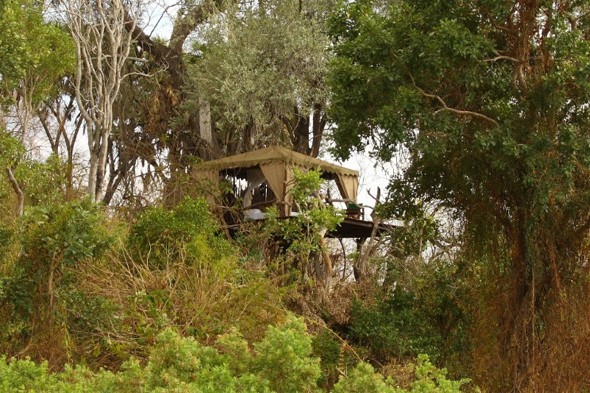
Image from here
Mark – three lovely questions. My view is that the jungles will resemble each other in certain ways, but will not be entirely similar (they won’t ‘necessarily resemble native speaker jungles’). The processes of squeezing and reduction, and the addition of drafting phenomena will apply for the reasons you suggest (‘the same pressures of communicating-as-we-think (ie “on-line”) under real time constraints’). But the outcomes of those processes may have different characteristics (colouring/flavours/scents) for each language background. A different type of jungle, but still a jungle.
Models of speech

Image from here
Hi Everyone,
Hope you had a good weekend – it was a beautiful autumn weekend here in Birmingham UK – still air, bright sun, multi-coloured leaves. Monday morning however, is very ‘Monday-morning-like’ – dark and damp.
The title of our discussion is ‘Should we integrate the teaching of listening and pronunciation?’
My mind keeps on changing about the answer to this question. Maybe because this is a miserable Monday morning, today my answer is ‘No’.
Because the goals are so different.
The goal of pronunciation is to be internationally intelligible – the achievement of this goal can be done in the Greenhouse and the Garden (to use our metaphor of last week) with the guidelines and rules of careful and connected speech that are in coursebooks.
The goal of listening is to be able to cope with and understand anything that comes your way via your ears. And the achievement of this goal requires familiarity and comfort with what happens in the Jungle. And the guidelines of rules in our course books are not adequate, because (despite the increasing use of unscripted recordings in course books) the Careful Speech Model dominates, and is an obstacle to the learning of listening.
We therefore need to distinguish between two models of speech: The Careful Speech model (for pronunciation) and the Spontaneous Speech Model for listening.
Below is an extract from a table from my forthcoming ‘Phonology for Listening’ which lists some of the differences between the two models.
Grateful for any comments, disagreements, or additions!
|
Careful Speech Model Greenhouse/Garden
|
Spontaneous Speech Model Jungle |
|
Differences which are important in grammar are audible |
Differences which are important in grammar are inaudible |
| Different tenses sound different‘She’s sold’/ ‘She sold’
‘They’d bought it’/ ‘They bought it’ |
Different tenses sound identical‘She sold’/‘She sold’
‘They bought it’/‘They bought it’ |
| Negative morphemes are clearly heard ‘could go/couldn’t go’ ‘very illegal/very legal’ | Negative morphemes are close to inaudible ‘kung go’ ‘verrilegal’ |
| Pairs such as ‘my train’ and ‘might rain’ are clearly distinguished. | Pairs such as ‘my train’ and ‘might rain’ sound identical. |
| Pairs such as ‘in the garden’ and ‘in a garden’ are clearly distinguished. | Pairs such as ‘in the garden’ and ‘in a garden’ are identical ‘inner garden. |
Young people at Cambridge

Image from here
It contains a lovely short selection of different speakers, mostly from the UK, but one from the USA (I think) and a couple for whom (it would seem) English is not their first language.
I assume that many of our students would really want to understand these young people, but might not necessarily want to speak like them. What do people think about this?
What do other people find of interest in this video? Do you hear it as ‘garden-like’ or ‘jungle-like’?
Roughing up a sentence
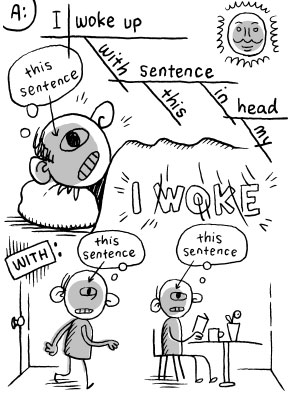
Image from here
Hi Sue,
Thanks for your comments on speed of speech, and giving us an insight into the psychological dimension of perception of speed.
There’s so much to say in response, but I’d like to take up something that you say right at the end in your mention of ‘little asides and lead-ins’.
I call these things ‘Drafting phenomena’ - phenomena that we don’t see in prepared speech, or in the written language: filled pauses and lexical filled pauses (level tones on words which have the same ‘buying-time’ function as filled pauses), and inserts such as ‘you know’ and ‘I mean’ and softeners such as ‘kind of like’. Expert listeners don’t notice them (unless they have become an annoyingly frequent habit), it is almost as if they are edited out of the sound track before we begin to process meaning. But they are there, and they contribute to the soundsubstance of spontaneous speech. They are there in the jungle.
For fun, I’d like to suggest taking a textbook sentence (greenhouse/garden) and then roughing it up with a bit of the jungle - these drafting phenomena.
So we could take a sentence from a textbook: ‘It’s the second biggest city in my country I think’, and then put it through the following stages.
Greenhouse/Garden:
|| it’s the SECond BIGgest CITy in my COUNtry i think ||
Or rather, following Mark’s suggestion, in two speech units, one triple prominence, one single:
|| it’s the SECond BIGgest CITy || in my COUNtry i think ||
Then we could demonstrate to students how to rough this up:
01 || UM ||
02 || i mean IT’S ||
03 || you KNOW ||
04 || THE ||
05 || SECond ||
06 || kind of like BIGgest ||
07 || CIty in my COUNtry i think ||
OR
01 || i mean IT’S ||
02 || UM ||
03 || you KNOW ||
04 || it it it’s THE ||
05 || kind of like SECond ||
06 || sort of BIGgest ||
07 || CIty in my COUNtry i think ||
And then we could get them to rough up sentences of their own choosing - doing garden versions, and then jungle versions, and performing them for their classmates.
This I see as being of benefit for both speaking and listening.
Ying’s dilemma, and squeeze zones

Image from here
I promised more about squeeze zones. Here it is.
The reason for my fascination with listening, and for my interest in squeeze zones, comes from reading an article about a Singaporean learner called Ying.
Ying is a learner who kept a diary about her experiences while she was learning to listen. She wrote:
‘I believe I need to learn what the word sounds like when it is used in the sentence. Because sometimes when a familiar word is used in a sentence, I couldn’t catch it. Maybe it changes somewhere when it is used in a sentence’ (Goh 1997, p. 366).
Ying’s dilemma (= a situation which makes problems) is that she fails to recognise familiar words when she hears them. She believes that she needs to learn something: how words change their soundshape when they occur in a sentence. Ying is describing clearly a problem that many native speaker teachers are largely unaware of: the soundshapes of words do change according to their relationships to other words.
The following four speech units, taken from Brazil (1994, chapter 1) illustrate Ying’s dilemma. In each of them, the word ‘where’ occurs, and it sounds different each time. Note the different pronunciations of ‘where’ - they are collected together at the end of the soundsoundfile:
01 || but i WASn’t sure WHERE ||
02 || WHERE MARket street was ||
03 || where she’d SAID ||
04 || where there were STREET LIGHTS ||
…WHERE…WHERE….where…where
In 01 ‘where’ sounds close to the citation form that you would find in the dictionary; in 02 it is shorter and the vowel is less of a diphthong; in 03 and 04 both ‘wheres’ sound like the short sharp bleat of a lamb. What these four examples show, quite neatly, is that words do indeed change their shape according to their relationship to other words.
Here are the four examples again, side-by-side in a sound file:
…WHERE…WHERE….where…where
Let’s look at these speech units in the five-part pattern. Remember from yesterday that prominent syllables occur alone in the even-numbered columns, 4 and 2. The odd numbered columns contain any number of non-prominent syllables, including zero. The squeeze zones are columns five and three.
|
5 |
4 |
3 |
2 |
1 |
|
|
01 |
but i |
WAS |
n’t sure |
WHERE |
|
|
02 |
WHERE |
MAR |
ket street was |
||
|
03 |
where she’d |
SAID |
|||
|
04 |
where there were |
STREET |
LIGHTS |
In 01, ‘where’ is prominent, tonic (falling tone) and it occurs before a pause: these are optimal conditions for the production of a citation form, but are relatively rare in everyday speech.
In 02, ‘where’ is prominent early in the speech unit, and is therefore not before a pause, it is therefore shorter than in 01.
In 03 and 04 the two ‘where’s are non-prominent, - in squeeze zones 3 and 5 respectively. It is the fact that they are in squeeze zones that give them these interesting shapes.
Position in the speech unit, and choice by the speaker of whether or not to make a word prominent, are therefore key determinants of the sound shapes of any word.
To help learners like Ying, we need to tell them about squeeze zones, and demonstrate what can happen in them.
Brazil, D. (1994). Pronunciation for Advanced Learners of English. Cambridge: Cambridge University Press.
Goh, C. (1997). Metacognitive awareness and second language listeners. ELT Journal 51(4), 361-369
Greenhouse, Garden, Jungle

Hi Everyone,
Thanks for the comments and questions. Ray, I see the three-part metaphor being used at all levels, in ways that I hope will become clear over the next few days. I believe we need to get students at all levels familiar and comfortable with the idea that the words they know have a wide variety of soundshapes.
Below is a description of the use of the metaphor with a scripted sentence from an intermediate textbook. It is a vocal gymnastics exercise, which gets students to savour (another metaphor) the soundsubstance of speech.
Vocal gymnastics
Here is a textbook sentence from New Cutting Edge Intermediate (Cunningham & Moor, 2005: 108) ‘I realised that I’d left my purse at home’.
Let’s give a greenhouse version, with every word (counting ‘I’d’ as one word) in a separate speech unit:
Example 1 Greenhouse version (T stands in front of, or points to, the picture of the Greenhouse)
|| I || REALised || THAT || I’D || LEFT || MY || PURSE || AT || HOME ||
The teacher does a listen-and-repeat (sorry Piers!) exercise with the class, either performing the speech units themselves, or using a recording. Using a variety of tone choices, and pitch heights, and emotions. But every syllable is clear, all segments pronounced clearly.
Then teacher moves to a joined up – garden – version, a tidy version of the sentence is likely to be given as a speech unit with four prominences (shown in upper case letters) and a falling tone beginning on ‘home’:
Example 2 Garden version (T stands in front of, or points to, the picture of the Garden)
|| i REALised that i’d LEFT my PURSE at HOME ||
Notice that we have partically reduced forms in the non-prominent syllables ‘that’ ‘my’ and ‘at’ – notice the linking of ‘that i’d’ – ‘tha.tied’
Now we will make our first steps in the jungle. So we are going to apply, strictly, the rule that this sentence is going to be performed with only two prominences, on the first syllable of ‘realised’ and on ‘purse’
Example 3 – first step in the Jungle (T stands in front of, or points to, the picture of the Jungle)
|| i REAlised that i’d left my PURSE at home ||
The skill is to make sure that the prominent syllables – in upper case letters – are said louder and longer than the other syllables, and are clear; and that there is a falling tone which starts on ‘purse’, and continues over the syllables ‘at home’.
Placing the speech unit in the five columns of a double prominence speech unit (the five part pattern) will enable us to make some useful observations. Notice that the columns are numbered in reverse order, with the prominent syllables in columns 4 and 2, and the falling tone starting in column 2.
Example 4 – the five part pattern
|
5 |
4 |
3 |
2 |
1 |
|
i |
REA |
lised that i’d left my |
PURSE |
at home |
The prominent syllables are allocated one column each: columns 4 and 2. It is helpful to think of columns 4 and 2 as protected zones, where the syllables are spoken as if they are part of a full citation form, with all segments preserved (this is not absolutely true, because the final segments are often altered or dropped, but it is a useful pedagogic fiction).
Most importantly however, for our first step in the jungle, is the fact that columns 5 and 3 are ‘squeeze zones’ where syllables will be subjected to all kinds of stream-of-speech changes. Column 1 is a semi-protected zone, where the syllables – though non-prominent – are slowing down before a pause, and though quiet, are not subjected to the same level of destruction as they would be in columns 5 and 3.
In squeeze zone 3, there are the following things to notice and practise:
- past tense ending of ‘realised’ is inaudible we get something close to ‘realise’
- the ‘th’ of ‘that’ is inaudible - we get something close to ‘realizatt’ for ‘realised that’
- the ‘t’ of ‘left’ is dropped
- ‘that i’d’ has become something close to ‘attad’
- the diphthong of ‘my’ has lost its glide, it becomes ‘ma’
The vocal gymnastics for the students to do - guided by the teacher - is for them to ‘travel’ from the greenhouse, through the garden, to the jungle, saying this sentence in the appropriate way for each location.
More on squeeze zones tomorrow.
The limitations of phonetic symbols
Gillian Brown is someone whose work I am frequently returning to. I wrote a blog here recently. I quoted this (1990:7), and do so again:
the stretches of acoustic blur often not longer permit any representation on a segment-by-segment basis
She is talking about ‘private’ speech between people who know each other well, indulging in relaxed conversations. The type of speech that I envisage her talking about is stuff like this - the three syllables which precede ‘any’ - from Emily:
Or this - the three syllables which precede ‘wasn’t’ - from Bob:
I reckon that the chances of getting a phonetic transcription that experts would agree on is very small. The difficulty is inherent in the fact that a continuous stream of speech would have to be represented by symbols for separate events.
