
Monthly Archives: October 2015
Listening Cherry 15: Sex education and Phonology … Part 2 - We are told the facts of life
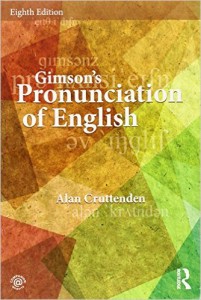
In the previous post I argued/complained that things that we teach, and get taught would fail a reality check. These were the rules of connected speech which we teach our students, and the phonology we get taught in our teacher-training. We are given simple rules which are easy to teach, which are good for promoting intelligible pronunciation but they misrepresent everyday spontaneous speech, and this has had seriously negative effects on the teaching of listening.
I have had the strong impression for much of my professional life that phonologists and phoneticians were not telling us the facts of life - instead they give us romantic fictions, and refrain from telling us about the truth which is - for them and us - embarrassing.
But I somewhat misrepresented the situation: phoneticians and phonologists do mention reality, they do mention the facts of life. But they do it in non-obvious ways.
For example, Cruttenden (2014) tells us
… there are some uncommon reduced forms which are heard only in rapid speech …. and these should not be imitated by foreign learners. The use of |jə| or |mə| in such phrases as your mother, my father will sound slangy and, if employed inappropriately by a learner, could appear comically incongruous. (Cruttenden, 2014: 333 – emphasis added)
The key words in this quotation are given in bold: one of them is a statement of frequency (‘uncommmon’) another is a statement of restricted application (‘only in’) and the last is a piece of advice (‘these should not …’).
Once we take into consideration the three speech styles I mentioned in Listening Cherry 13 (greenhouse, garden and jungle), we can see that the use of the words ‘uncommon’ and ‘only’ refer to garden (genteel, slow colloquial) speech - the type of speech which is an appropriate model for clear pronunciation. However, for the jungle, which is the domain for listening, these terms need to be translated:
- uncommon should be read to mean ‘can happen at any time’
- only in rapid speech should be read to mean ‘normal in everyday speech’
Cruttenden also advises that ‘these should not be imitated by foreign learners’. This advice means ‘these are not appropriate for the goal of pronunciation’ (which is, remember, quite different from the goal for listening). This advice needs to be read to mean ‘essential to master for the purposes of learning to perceive and understand’.
We should trawl such books as Cruttenden (2014) for their mentions of rapid casual speech (even though they are often deprecatory/disparaging) to provide us with a syllabus for listening.
For example, here’s a fact of life from the jungle in Cruttenden (2014: 315) who gives examples of a type of elision ‘… which sometimes occurs in rapid speech’ which include ‘the ‘very reduced forms of I’m going to /ˈaɪm ɡənə/, /ˈaɪŋənə/, /ˈaɪŋnə/. We can present them in the table below, showing their rightful place in the greenhouse/garden/jungle perspective.
Greenhouse | Garden | Jungle |
|---|---|---|
/ˈaɪm ɡəʊɪŋ tuː/ | /ˈaɪm ɡənə/ | /ˈaɪŋənə/ /ˈaɪŋnə/ |
So, expert phoneticians and phonologists do mention the truth, but in their books for the ELT market:
(a) their main focus is on the greenhouse and the garden
(b) it takes careful reading to find the truth (footnotes, last paragraph of section)
(c) their comments have to be translated
and an even stronger but …
(d) we in ELT don’t want to know
More about (d) in the next post.
Cruttenden, A. (2014). Gimson’s pronunciation of English [8th Edition]. Oxford: Routledge.
Listening Cherry 14 - Sex education and phonology in ELT
Image from here
Like all children, I asked my parents ‘Where did I come from?’ In my case they replied ‘Oh, we found you under a gooseberry bush.’ This answer was convenient for them, because it helped them avoid explaining what was for them an embarrassing aspect of human life (strong Catholic influence on their education) and for which they had no appropriate language to explain it to a child.
This answer satisfied me for a fairly long while, even though it was somewhat complicated by additional evidence that did not quite fit this picture - cards with images showing a flying stork carrying a baby in a cloth suspended from its beak. However, I was quite good at putting two and two together, and I reasoned that it was the stork which had placed me under the gooseberry bush in order that parents could find me. My parents’ answer both satisfied me and put an end to further enquiry for a few years.
But eventually, it dawned on me that there was something about the relationship between males and females, and particularly the cooperative activities that they engaged in which led to the arrival of a baby after an interval of nine months.
And after a certain time, my parents just assumed that I knew the truth of the matter, without ever explaining it to me.
So what has this got to do with Phonology in ELT? Teachers undergoing training (like a young child gaining knowledge of the world from their parent) are told simple things about language which are fictions. For speech these fictions include: English is stress-timed; high falling tone means surprise; yes-no questions have rising intonation; the nuclear stress goes on the last lexical item. For the purpose of promoting intelligible pronunciation, the fictions are useful; but for the purposes of promoting listening skills in everyday speech they are a huge obstacle. They are far too tidy, too non-messy, and far too dependant on a view that speech is regular, and rule-governed.
As we spend longer in the profession, and (big if) if we attend to the evidence of our ears and recordings of spontaneous speech we begin to realise that there is something about the particular activities of adults speaking outside the classroom which the fictions do not account for. It seems like anything can happen. So, as experienced teachers and nascent researchers into speech we go to phonologists and say ‘Oh er, excuse me, er - like you know, er we’ve kind of noticed that English doesn’t seem to be stress-timed’ and ‘Oh er, you know that rule about yes-no questions? Well er it seems like they can have any sort of intonation’.
And the answer we get? ‘Yeah, we know that.’
Like my parents, the phonologists/phoneticians know the truth, but they tell us something safe and non-embarrassing/non-awkward to satisfy our curiosity, puts an end to further enquiry. This needs to change if we want to improve the teaching of listening.
ELT needs the expert phoneticians/phonologists to come up with a grown-up account of how spontaneous speech actually sounds, how it works, and how L2 listeners can be helped to perceive and understand it. It is time to put aside embarrassment at the messiness, and to devise ways of explaining the exciting irregularities and the miraculous ways in which humans perceive and understand the language of everyday speech, so that we can teach it more effectively.
But actually, the phonologists/phoneticians will say ‘We did tell you, the grown up account is already there …’ (to be continued).
Listening Cherry 13 - Connected speech rules are too genteel

Image from here
In my work I distinguish between three styles of speech: the Greenhouse, the Garden, and the Jungle. The Greenhouse is the domain of the citation form, where each word is presented in isolation, with all its features perfectly represented, un-interfered with by other words. The Garden is the domain of the rules of connected speech, where words are in orderly and pleasing arrangements and where they glide into each other, with genteel touches (handshakes) and make slight changes in sound shapes at their boundaries. Words behave politely, in a way that appropriate for those genteel occasions when you are having tea on the lawn (‘Would you like another cup of tea dear?’ becomes ‘Wu jew lie ka cuppa tea dear?). The Greenhouse and the Garden are useful for teaching pronunciation, and clear intelligible speech. The Jungle is real life speech, where words are mangled, crushed, bashed in a disorderly mess - speed and lack of clarity are the order of the day (‘July annuvver cuffer tea pop?’). The Jungle is where we need to go if we are to improve the teaching of listening.
Our much cherished rules of connected speech belong in the garden. My contention is that they are therefore too genteel, which I now hope to demonstrate.
The following example comes from a textbook that I have used recently. It illustrates the linking sounds /r/, /w/ and /j/ in the underlined parts:
These are enormous sums of money for people to actually invest in in cough cold remedies (Oakey & Treece, n.d.)
We look at such examples, and inspect them at leisure, and sound out to ourselves the genteel handshakes between the words which are joined by the linking sounds.
- There is an /r/ linking ‘are’ and ‘enormous’ - thus ‘ah-ree-normous’
- There is a /w/ linking ‘to’ and ‘actually’ - thus ‘too-wack-shuh-ly’
- There is a /j/ linking ‘actually’ and ‘invest’ - thus ‘ak-chew-lee-yin-vest’
This is a very genteel activity - a slow-paced, good-mannered approach to word contact in which words are savoured at leisure. But when you listen to the recorded extract below (from a lecture) these linking phenomena are far from salient, there is so much more going on in the sound substance, including very ungenteel word-bashing and squeezing. These other phenomena drown out our linking sounds, and they are very difficult to perceive, and they may even be absent. Have a listen:
(Oakey & Treece, n.d.)
There are sixteen words (counting both occurrences of ‘in’) and twenty-five syllables (counting three in ‘actually’) going at an average of 5.7 syllables per second - which is fast, much faster than is likely in our leisurely savouring of the linking.
For an example of word-bashing, listen to the words ‘enormous sums’. You should hear that the final syllable of ‘enormous’ does not occur, it disappears into the initial segment of the following word ‘sums’ - as the result of a very non-genteel bashing. So we get
A transcription reveals other things about this extract.
01 || these are eNORMous || 6.9
02 || SUMS of MONey || 7.7
03 || for PEOPle to actually inVEST in || 5.8
04 || in COUGH cold REmedies || 3.7
These are four speech units (transcribed following the conventions of Cauldwell, 2013; Brazil, 1997). Each line is a speech unit, upper case letters denote prominent syllables, lower case letters denote non-prominent syllables; the ‘linking’ is shown as underlining. The speed of each speech unit is given in syllable per second at the end of teach speech unit. Each speech unit has a different speed, with a high of 7.7 and a low of 3.7 syllables per second. Notice that the predicted linking sounds occur in non-prominent syllables, which are going really fast in the squeeze zones (Cauldwell, 2013, Chapters 2/18) of the speech units.
And if we consider the linking in 01, there is a case to be made for the linking /r/ not being present at all. Listen to the following extract which gives the words ‘are enormous sums’ at both full speed and half speed. Because we know that they contain the words ‘are enormous’, we are primed to hear them (see the work of Helen Fraser for more on priming).
It seems to me an equal possibility that the sound substance has no [r] at all. Listen to the extract again, and pretend the speaker is saying the word ‘ginormous’, but without the first segment, and without the last syllable - thus ‘-inorms’ [ainɔms]. If you do this, you may not hear the ‘linking /r/’ at all. When I listen in this way, I hear an [a] from ‘are’, plus [i] from ‘enormous’ giving a sound something like the first person pronoun, and emphatically not ‘ah-ree-normous’.
There is so much more going on in spontaneous speech than is allowed for in our ELT textbooks. Exercises involving the slow enacting of linking sounds are too tidy, too genteel - ‘too garden’ - for the purposes of teaching listening. We need a description of spontaneous speech to help us and our students in our encounters with the Jungle.
Brazil, D. (1997). The Communicative value of intonation in English. Cambridge: Cambridge University Press.Cauldwell, R.T. (2013). Phonology for listening. Birmingham: Speech in Action.
Oakey, D. & Treece, P. (n.d.) English for academic purposes programme: Developing listening skills & giving presentations. EISU, University of Birmingham.
