
60 - My blogs - and a summary rant
I have now reached ‘Listening Cherry’ number sixty, and this seems like a good moment to look back at the …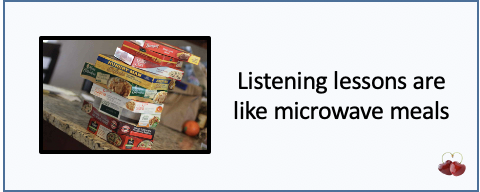
59 - Microwave ready meals
The way we teach listening is not effective. We have recipes and ingredients. But what we do in listening activities …
58 - Teaching well is a problem
We teach listening well - that’s the problem. We have a well-established listening comprehension methodology which counts as/masquerades as ‘all …
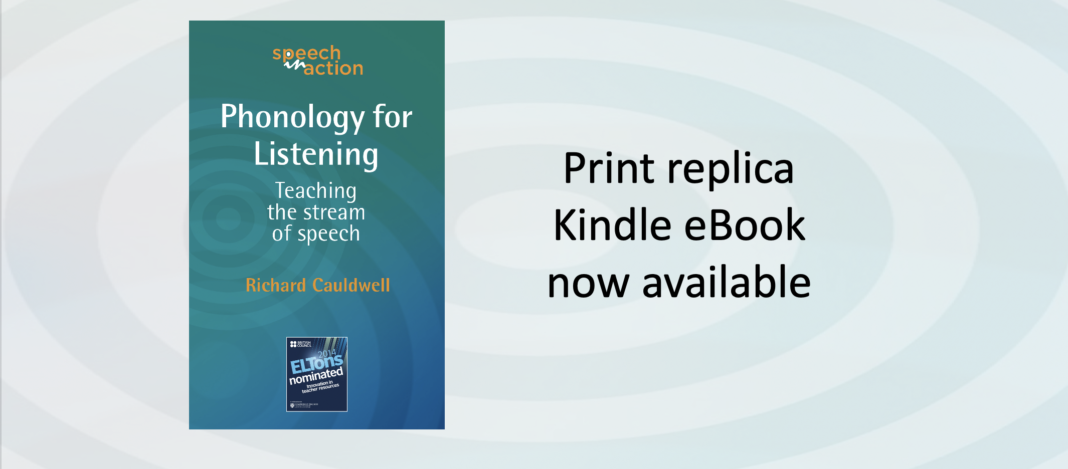
A Kindle eBook of Phonology for Listening - Teaching the Stream of Speech is listed on Amazon. The file is a print replica in fixed layout, so text and pages match the printed book. That format is awkward on the smallest Kindle devices such as the Paperwhite, but it behaves well in Kindle apps on phones, tablets, and larger Fire models. Where the app allows it, you can play the embedded recordings straight from the page. Check the Amazon product page for device notes before you order.
Listening research you can use in class
Speech in Action grew out of classroom experience and a wish to treat listening as something you teach, not only test. The site gathers books, sound files, handouts, and short articles that focus on what learners actually hear: reduced words, linking, intonation choices, and the difference between careful citation forms and relaxed everyday speech. Teachers who already run comprehension tasks can add short decoding episodes so that learners notice how stream of speech English really sounds.
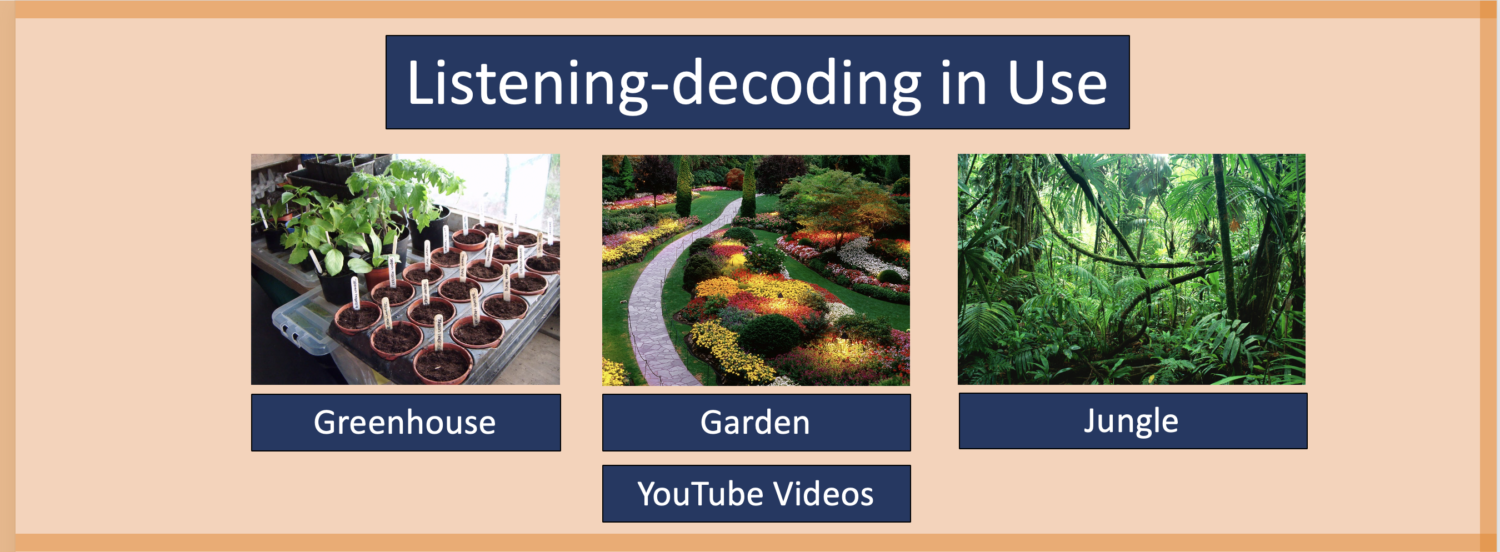
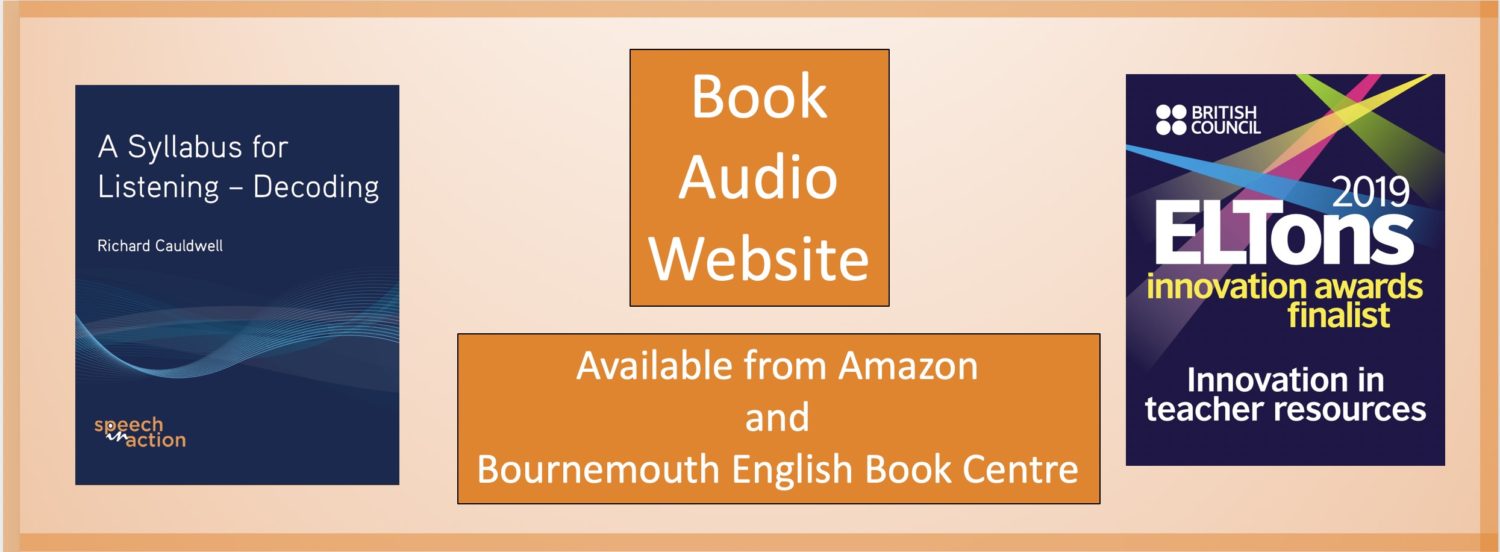
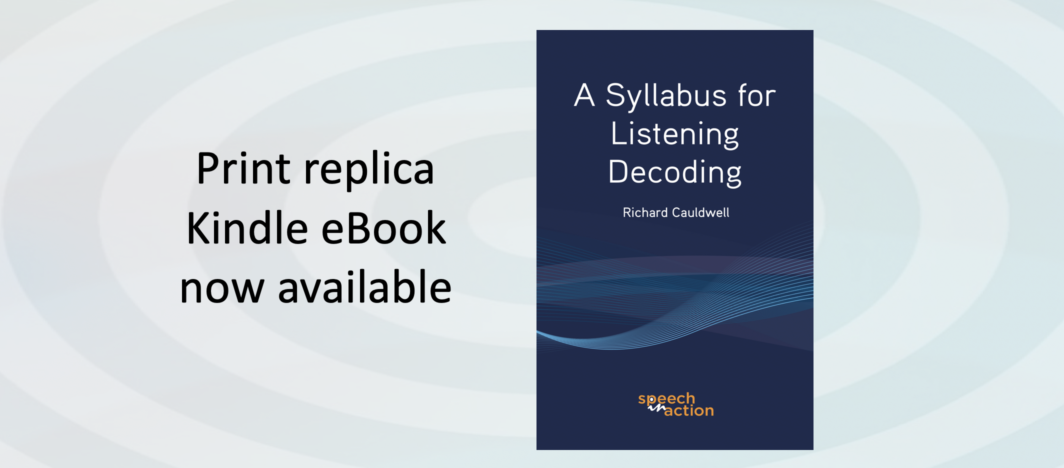
Phonology for Listening and A Syllabus for Listening - Decoding remain the core print routes into that work. Listening-decoding in Use shows how the ideas look in sample lessons and video. The Jungle Listening materials address fast, messy input such as radio clips and conversation. Discourse intonation pages carry on David Brazil’s line of analysis for teachers who want to link tone and meaning in longer stretches of talk.
The Listening Cherries posts at the top of this page are informal essays on method, coursebook habits, and classroom experiments. They sit beside the more formal publication pages and give a running commentary on why decoding still matters in online and blended courses.
For a short pre-listening routine with numbered steps, see Decoding warm-up before listening. That post links back here to the home page for carousel updates and blog highlights.
Finding your way around the site
Use the main menu for deep links. About leads to training offers, publications, and discourse intonation resources. Speech in Action - winding up explains how older apps and books were retired, what is still sold, and what is planned next. Syllabus for Listening and Phonology for Listening each have their own sound-file indexes, corrections, and review lists so you can match audio to a chapter without hunting through unrelated folders.
Audio collects talks, limericks for pronunciation, and pieces on tools such as Sonocent. Blog indexes the Listening Cherries series by year band. If you only need policy text, the privacy page sits at the end of the same menu. Contact details for Richard Cauldwell appear in the footer on every page.