
Richard Cauldwell
Listening Cherry 28 - Distorted blur
In this blog I will attempt to demonstrate, using distorted orthography, the difficulties involved in learning to listen in a language in which you are not yet expert (second language learning). First, I need to tell you about Anna’s anger.
Anna is a friend of mine (a very prominent professor of English) whose first language was not English, she had to learn it at school. When she was a student, she hated the approach of one of her teachers to listening lessons. And she told me:
…I’ve hated the underuse of the material. I’ve … answered three silly questions … then someone tells me patronisingly (it IS bloody patronising) that the rest doesn’t matter. Well it does if I want to learn the language!
Let’s explore the kind of classroom activity that might have made her angry. Because this is a written blog (in sight substance) I am going to transpose her listening comprehension activity into a reading comprehension exercise (using distorted orthography) on a very short text.
Here is the teacher’s introduction (remember I am recreating in reading-activity form what was a listening activity, so this is not actuality).
You will read about a young woman, Emily, who was given a teaching job in a school in South Africa. She had gone there to work as a young volunteer, at the age of eighteen, before coming back to the UK to enter university. Read the following questions - there are three choices of answer, and then read - scan - the text to find the answers.
- What subject was she given to teach? (a) Maths (b) English or (c) Technology
- How many pupils were in the school? (a) 500 (b) 1500 (c) 2000
- How many times did the word ‘teacher’ occur? (a) Once (b) Twice (c) Three times
(What you are looking at, and inspecting, is a blurred version of an orthographic transcription. There are a few differences from normal orthography: upper case letters are for prominent syllables, and lower case letters are for non-prominent syllables – the mush of speech.)
Having given the students time to arrive at answers, the teacher would then ask the class what they thought the answers were, and praise them for getting the answers which are:
- What subject …? (c) Technology
- How many pupils …? (b) 1500
- How many times … ‘teacher’? (b) Twice
If our teacher were Anna’s teacher, he/she would move on to another activity – refusing to answer any other questions, because, having arrived at the answers, there is – in his/her view nothing else to do. The communicative act of arriving at an understanding of the meaning has been achieved, so the teacher believes that their work is done as far as this activity is concerned.
But remember that Anna wants to learn the language. And because (in this blog) the language is presented as sight substance (albeit blurred), it remains available for inspection. This is completely unlike sound substance, which will have departed the scene, and would therefore be invisible. Out of sight, out of mind - ignorable.
Because (in our imaginary scenario) Anna is looking at sight substance, she and her fellow students can point to the blur and ask: ‘What does this mean?’ But actually (and this is the point) they are more likely to ask ‘What are these words? Because picking out the words in this blurred sight substance is difficult.
Anna’s desire to learn the language is not satisfied by having done the communicative task of answering the questions. She wants to stay with the substance, and improve her ability to recognise words in the substance.
So rather than walk away from the substance, what could Anna’s teacher have done in the listening lesson? (We now revert to sound substance). The answer is simple: stay with the sound substance of the recording. Always, always, always allow time for this question:
Now that you know the answers, listen again, and try and identify the words that lead to the correct answers.
Then, always always always, do something with a short extract (which either you or your students choose) and go to work on it. Ask them how the words in the selected extract sound to them, and tell them how they sound to you. Do vocal gymnastics (see here), get them to savour different ways of saying the words: different speeds, different accents, severely reduced, extra carefully elongated. Encourage them to create raps, or ear-worms. (More on this in future blogs, and in A Syllabus for Listening (forthcoming).
Listening Cherry 27 - Sight and sound shapes
Imagine that every time you see a word written down it looks different: letters in a different order, letters missing, different fonts, different sizes, different use of caps and lower case. Additionally, imagine that the spacing (or lack of it) between words varies according to the speed at which the author originally wrote them. So if the author wrote very fast, many words would squash up close together so that they become a disheartening, difficult-to-decipher mess of word-on-top-of word. And if the author wrote very slowly, pausing to think after every couple of words, the letters of each word would be widely spaced and the words themselves would move apart leaving annoyingly big gaps.
Sight shapes
Imagine, to put it differently, that words have different sight shapes every time you see them on the page. This would add to our workload as teachers and textbook writers, but we would teach this, and we would seek to find useful generalisations and patterns in the varying sight shapes. We would teach this because we (and our students) could see the words, they would exist to be inspected, analysed, studied and learned. They would be in sight, and very much in mind. We could assemble all the different sound shapes of a given word, and put them in a visual learnable sequence.
Of course, in reality, words have very few sight shapes, and these are easily learned: they do not change shape according to the speed that author writes: they do not suffer squashing, squeezing or elongations. And if sight shapes present a difficulty, then they still have the immense advantage of staying in the same place on the page - in sight - so that we can work on deciphering them.
Sound shapes
These shapings (squashing, squeezing, elongations) happen to the sound shapes of words. (All words have a wide variety of sound shapes - not just the ‘weak forms’.) And the trouble is, because that they are not visible or inspectable we don’t teach, study, or learn them. They are out of sight, and therefore out of mind.
Out of sight, out of mind
Our students, cannot (with conventional print plus audio) point to the sound shapes and say ‘Look at them - tell me why they are like that!’ Teachers cannot say ‘Look at this sound shape, it is one of the many sound shapes of the word produced‘
You might think we could do all this with the transcript of a recording, but unfortunately words have the same sight shape each time they occur in the transcript. The sight shape version of a recording - the transcript - is thus a misrepresentation of the recording, and the sound shapes that it contains.
One way forward might be to find ways to help our students point to the sound shapes and say ‘Look at them - tell me why they are like that!’ and to help teachers say ‘Look at this sound shape, it is one of the many sound shapes of the word produced‘ (see here).
But we have to be careful using the verb ‘look’. Any sight shape version of a word - including phonetic versions - misrepresents the sound shape. ‘Looking’ may help, but the audio, the sound shapes have to be immediately accessible. The imperative needs to be ‘Listen!’ - or (better) ‘Look and listen!’ with the sight shapes and sound shapes either embedded in each other (as in the Flash movies you can find here), or placed side by side, as can be done in Sonocent’s AudioNotetaker (see here). There has to be immediacy of access to the different sound shapes of a word.
Although main course textbooks and contemporary listening methodology does not yet include these things, examples of what needs to become orthodoxy can be found in Hancock and McDonald’s Authentic Listening here and here, and in my own work here, here and here.
(NB Some of these links require you to play Flash Movies, which - in Safari - you may need to enable.)
Listening Cherry 26 - Teacher training for listening - the Kezzie experience
It took me until 1990, twelve years into my teaching career (yes, I’m well into my fourth decade now), before I realised that native speaker teachers such as myself are deaf to what is really going on in the sound substance of speech (that’s bad); that as a result we are unable to teach our students how to decode the stream of speech (that’s worse); and if we follow conventional methodology, we behave as if we do not need to (worst). Fortunately, it seems, some younger teachers are learning to teach decoding somewhat earlier in their careers than I did.
At the 2016 IATEFL conference, Richard Chinn and Marie Willoughby - teacher-trainers at International House London - quoted a colleague, Kenzie Moynihan, talking about her unease about the teaching of listening:
I knew something was wrong but I didn’t know what, or how to fix it. (Chinn & Willoughby 2016)
This expression of unease brought back memories of my own unease that started very early in my teaching career. (I started in Hong Kong in 1979).
This discomfort was exacerbated over the years by the writings and conference presentations of ELT experts. The most notable of these was a conference presentation advertised as ‘The What of Listening’ - and the presenter began by saying ‘The What of listening is important, but not as important as the How’ - and he proceeded to focus entirely on ‘How’ of conventional testing-understanding methodology.
Back to the present day. I have subsequently communicated with Kezzie (the teacher-trainee quoted above) and asked her about her experiences. She told me that everything changed for her when she was doing her DELTA course (a training course for experienced teachers).
The thing that specifically made me think more critically about listening tasks was a decoding input session, in which we examined a Scottish person’s accent. This was then compared with a normal comprehension task … the stark contrast between the two helped to show me that I had been right in thinking that normal top-down processing isn’t always going to help students improve their listening skills, as it hadn’t helped us when we’d listen to a series of unintelligible accents, and we were native speakers!
The crucial point here is highlighted in bold - the normal comprehension task had not helped her (a native speaker) get to grips with a different accent of English.
Kezzie goes on to say that she subsequently used decoding activities in her own classes, and has had ‘overwhelmingly more positive feedback’ from students. And the good thing is (NB not the best thing as you will see below) she writes
Even the students who don’t feel like they did well in class have often said that later they have recognised some elision or a combined sound that we focused on in class.
(In passing we should note that this remark shows that students can and do learn without feeling that they are doing well: discomfort and frustration are often important feelings in the learning process cf. Cauldwell, 2002, available here)
So what’s the best thing? Well, the best-best thing is that Kezzie, Richard and Marie and their colleagues are now incorporating decoding activities into their initial teacher training courses, the CELTA. So these beginning teachers won’t have to wait twelve years for their enlightenment (or perhaps that word should be ‘en-sound-en-ment’) as I did.
Acknowledgements: Thanks to Richard Chinn, Marie Willoughby, Kezzie Moynihan and last (but foremost) Melissa Lamb who let me observe her input session to CELTA trainees at IH in London.
Cauldwell, R. (2002). Grasping the nettle: the importance of perception work in listening comprehension. Available here.
Chinn, R. & Willoughby, M. (2016). ‘The gap’ - training teachers to develop learners’ listening skills. Conference. IATEFL 2016.
Listening Cherry 25 - ELF one two three!
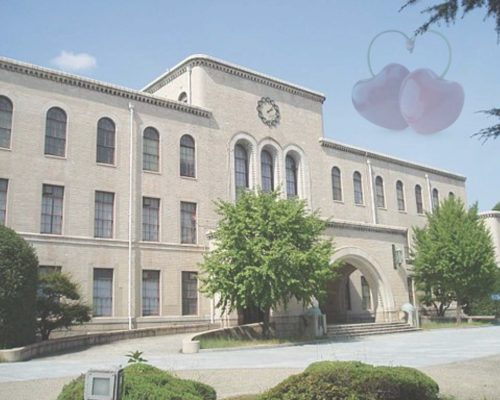
In the 1980s I worked at 神戸大学 (Kobe University, Japan) as a teacher of English. Towards the end of my time there, I was invited to a university party hosted by the president of the university. It was for the international students who were about to return home after varying periods of study - usually a year, sometimes more. I was amazed at how many there were (they weren’t there to learn English, so I hadn’t come across any of them) and at the range of countries they were from. I walked up to a group, and we did introductions all around in English. They were from Brazil, Hungary and France. They then - probably assuming that I could manage linguistically - resumed their conversation in Japanese - their lingua-franca of choice. I was amazed. It a was wonderful, surprising, but electrifying experience for me to witness a language other than English being used as a lingua franca. It was obvious from the introductions that they were all good at English, but it was not the language that they relaxed into. Quite naturally, after a year or more in Japan, Japanese was their go-to language.
From my understanding of a recent paper by Jenny Jenkins (2015 available here) this is an example of ELF3, of which the Jenny gives the working definition ‘Multilingual communication in which English is available as a contact language of choice, but is not necessarily chosen’ (ibid, p. 73). As you will notice from this definition, ELF now aligns itself academically with Multilingualism. How did this happen?
[I have written a six-page account of Jenny’s paper, in which I try and describe the movement from ELF1 through ELF2 to ELF3, which you can find here. This blog is an adapted version of the final section of the working paper.]
ELF first aligned itself with World Englishes, and sought to identify ELF varieties in a period that Jenny refers to as ELF1. But having recognised that the infinite variability of the evidence, the varieties project came to an end, and researchers subsequently aligned themselves with Communities of Practice (CoP see here for a definition) in in a phase that Jenny refers to as ELF2. But Jenny has recently realised that there were problems with ELF2’s orientation with CoP:
- English was viewed as the superordinate language
- Insufficient attention was paid to the emergent nature of ELF (p. 64) in transient encounters
- It was unrealistic for researchers to focus exclusively on stable groupings of ELF users as the norm
- Definitions of ELF2 did not allow for situations in which English is available, but not used.
Jenny proposes that the solution to these problems is to place multilingualism ‘at the forefront, its raison d’etre’ (p. 63). She suggests viewing ELF as ‘within multilingualism rather than the current view which sees multilingualism as an aspect of ELF’. She suggests the term ‘English as a Multilingua Franca’ which she defines as:
Multilingual communication in which English is available as a contact language of choice, but is not necessarily chosen.
Later in the paper (pp. 75-76) Jenny lists four key aspects:
- Multilingualism is the superordinate
- The other languages of everyone present … are also present in the interaction.
- Need to rethink the notions of multilingual repertoires/resources - JJ suggests ‘repertoires in flux’
- Not communities of practice, but ‘contact zones’. (The notion of English as a Multilingua has to be able to characterise transient, ad hoc, and even fleeting ELF groupings).
The interaction between myself and native speakers of Brazilian, Hungarian and French in Kobe now be described using some of the terms of this list of key aspects. Our group of four people at the party became a ‘contact zone’ which was a transient ad-hoc grouping, in which English played a role in the introductions phase - but not the main role in the interaction as a whole. For the principle parts of the interaction, Japanese was used. The languages known (I assume) by all four of us to be available were: English, French, Japanese, Hungarian, Portuguese. But each of us might have other languages in our repertoires that the others did not know about - in my case, there was Cantonese (intermediate level in specific topic areas: child control, nappy states, teething, food and cooking).
So here we are in the era ELF3. The above paragraphs are a rather dense/compact attempt to explain to myself the evolution from ELF1 through ELF2 to ELF3. For a more gently paced version you can read this Working Paper here. But most importantly you must read Jenny’s paper here.
Image from here.

Listening Cherry 24 - Keynote wins ELTon - lovely versions of ‘asked’
Last week, I was at the British Council’s ELTons awards for Innovations in English Language Teaching. The winner of the award for ‘Excellence in Course Innovation’ was Keynote of which you can see the cover of the highest level ‘Proficient’ above. I was delighted for them, as I was rooting for them.
The authors Paul Dummett, Helen Stephenson and Lewis Lansford are to be congratulated - as well as (of course) the design and editorial teams.
Each of the twelve units begins with a TED talk from speakers of British, American, Australian, African, Swedish and Indian English. And the range of accents is wonderful, giving a lovely juxtaposition of (a) native speaker correctness in the pronunciation component of the materials, and (b) what the speakers actually do in their TED talks.
For example, the pronunciation section in Unit 2 focuses on consonant clusters, among which is the word ‘asked’, giving the reference pronunciation as a British English Greenhouse form - as in row 1 of the table below.
In the TED talks themselves however there are examples of ‘what speakers of English actually say’. With ‘asked’ - and with a number of the consonant cluster words - very few people anywhere in the world say them as perfectly as the actor giving the greenhouse form. The ‘k’, and the ‘t’ at the end of ‘asked’ are often dropped; and the vowel varies a huge amount: that wonderful enthusiast and communicator Hans Rosling has a Swedish-English(?) pronunciation in which the vowel in ‘asked’ rhymes with BrE ‘law’ - cf. row 2 in the table below.
For fun, in row 6 I have spliced together the instances of ‘asked’ with one immediately neighbouring word, and in row 7 I have spliced together the instances of the single words.
Greenhouse | Garden/Jungle |
|||
|---|---|---|---|---|
1 | asked | |||
2 | and then I ask my students I've asked them over the last two years I've asked |
|||
3 | My mom asked me what I would want my house to look like |
|||
4 | I asked him how he became such an expert on fish |
|||
5 | She asked where I had learned to speak English so well |
|||
6 | asked asked them/asked me/asked him/she asked |
|||
7 | asked asked/asked/asked/asked |
|||
The juxtaposition above is not representative of the presentation in the student’s book. The book is beautiful to look at, but does not bring the sound files side-by-side like this. (Though the as yet unpublished additional components may do so).
Listening Cherry 23 - AudioNotetaker and the bar of chocolate
Imagine that you have a recording ten minutes long. Easy. Now imagine that this recording is a bar of chocolate ten minutes long. Not so easy, but bear with me.
The bar looks very uniform in flavour: it is the same colour along its entire length. But under the chocolate coating, someone has told you that there are many different flavours of filling dotted along the length of the bar out of sight, and in unknown locations. Somewhere inside the bar there are flavours you like: orange, strawberry, nougat, hazlenut, brazil nut. And flavours that you don’t like: fudge, apple crunch, praline. Naturally, you want to find and eat the flavours you like, and you want to avoid the ones you don’t like.
Now imagine further (sorry to push you) that there are traces of these flavours are on the surface of the bar, which is going to move past you. As it passes you will be allowed to lick the surface of the bar so that you can detect each flavour as it goes by. The bar will go past you at a fast pace, once only. You cannot control the speed, you cannot stop the progress of the bar. You will have to remember where the nice bits were so you can find them again, and relish them at leisure; you will also have to remember where the nasty bits are so you need not waste your time and appetite on them.
Difficult uh?
Wouldn’t it be nice to be able to cut the bar - as it goes past you - into reasonable-sized chunks, and colour-code your favourite flavours as they pass by so that you can find them later? And colour-code the unliked flavours so that you can discard them?
At this point we need to withdraw from the chocolate fantasy - AudioNotetaker cannot do this for chocolate.
But it can do it for audio recordings! Section and colour-code the nice bits in real time - they appear as separate audio chunks that you can label and return to and savour at your leisure!
More serious evaluation here. And you can download a free trial here.
Image from here.
Listening cherry 22 - Wow! Sue Sullivan’s speech stream
Sue Sullivan at IATEFL 2016 - Birmingham
Real live language - Speech stream and the brain box
Sue won a scholarship from International House, ‘Brita Haycraft Better Spoken English Scholarship’ to attend this conference (she lives and teaches in Christchurch New Zealand).
IH people were delighted with her talk, as was the attractive young lady who sat next to me during the talk - the only time we made eye-contact was right at the end, and she went ‘Wow!’
And it wasn’t my good looks that she went ‘Wow’ to. Below explains her ‘wow’.
Sue teaches adult immigrants, and part of her teaching involves ‘Speechstream’ work. She takes videos of TV programmes, and finds bits of fast speech that her students can neither understand nor de-code. (Sue says: ‘When they can’t hear it, rejoice!’). This is a wonderful circumstance, the perfect opportunity for learning. She gets the class to mimic the non-understood speech stream (Sue calls it a ‘gleep’) - they do it vocally, and with hand and arm gestures. This voice gym work is bottom-up processing without understanding. She wants the the non-understanding and pre-verbal handling to go on for some time, and she delays the resolution into words. The reasons for pre-verbal processing & no written word is to prevent the L1 language system (its pronunciation component) engaging with its suppositions about speech. She explained that working in this way forces open the 1st language learning processor.
The justification for this approach takes us into the brain - away from the bits that do conscious learning, to the basal ganglia - the location of control of those muscle movements that are not deliberate. Sue argues that the substance of language is physical - hence the vocal mouthing, and hand/arm gestures.
Sue says ‘Maybe five minutes of voice gym work and then resolve into words and meaning’. She also asserts (I love this bit) ‘When they want to understand too early, this is an obstacle to learning.’
Student reactions: the students sometimes say that in later hearings the recording has been slowed down - when in fact it has not, they are simply riding along comfortably with the wave of the stream of speech at a speed they are now familiar with. She teaches them other language skills as well, but this ‘speech stream’ work is something they ask for repeatedly.
Wow indeed. (Sadly, I never saw the ‘wow-er’ again).
Image from here
Listening Cherry 21 - Vocal gymnastics
Image from here.
‘Vocal gymnastics’ is the term used in my current work to refer to activities which serve the goal of improving the students’ listening, but which involve them in using their voices. To an naive observer, the activities will look and sound like pronunciation activities which practise the bad habits of being unclear, unintelligible, and incomprehensible.
But I prefer to avoid using ‘pronunciation’ when talking about such listening activities, precisely because it is so strongly associated with ideas of clarity, intelligibility, and correctness.
Much of the speech that students have to listen to in everyday life is unruly, unpredictable, and messy – quite the opposite of the speech style we want them to emulate in their pronunciation and speaking. So the vocal gymnastics activities are quite specifically not designed to help students become more intelligible in their own speech. On the contrary, these activities are designed to help students become familiar and comfortable with the fast messy speech that they will encounter in real life.
So what do these exercises consist of? They typically focus on on a ‘key phrase’ which is a short group of words (e.g. ‘so you won’t be’, ‘where there were’). Each key phrase is used to illustrate the difference between the Greenhouse, Garden and Jungle forms of words - for example the fact that consonants or syllables are often dropped (‘consonant death’, ‘syllable death’). For more on Greenhouse/Garden/Jungle see here.
Teachers conduct students saying the different forms of the key phrase in choral drills, in rounds and in ping-pong activities. The Greenhouse/Garden/Jungle forms are first presented in tables such as Table 1 below. The Greenhouse (citation) forms are given in column 1 in both orthographic and in phonetic symbols; the middle column gives the Garden version with rules of connected speech applied (in this case elision of ‘t’ of ‘won’t’ and the ‘n’ becoming ‘m’ before ‘b’); and column 3 has the Jungle version, with ‘so you’ becoming a single syllable and the ‘m’ of column 2 disappearing. The three forms of the bottom row are presented in a recording, and after listening several times, students are asked to repeat all three forms at the same time and the same speed as the recording.
Table 1
| Greenhouse | Garden | Jungle |
|---|---|---|
| SO YOU WON’T BE | SO you WONE.be | syu.wo.be |
| soʊ.juː.woʊnt.bi | soʊ.jə.woʊn(woʊm).bi | sjə.woʊ.bi |
Then attention turns to Table 2 below, where there are two options for classroom activities (actually, with language presented in a table there are a larger number of options, but I shall focus on just two): the round, and ping-pong.
Table 2
| 1 | 2 | 3 | 4 | |
|---|---|---|---|---|
| GRN | SO | YOU | WON’T | BE |
| GDN | SO you | WONE be | HERE | THEN |
| JNG | syu.wo.be HERE then | syu.wo.be HERE then | syu.wo.be HERE then | syu.wo.be HERE then |
(For this section of the blog, as it is a set of instructions, I will go into instructional mode, and use ‘you’ and imperatives).
The round
For the round, divide the class into three large groups (e.g. left, middle, right) and explain that you are a musical conductor, and that they are to start reading the table, starting at row 1, and then proceeding to rows 2 and 3, following your beat. When the left-hand group starts row 2, you get the middle group to start row 1, and when the middle group starts row two, (the left-hand group will now be on the last - Jungle - row) you get the right-hand group to start row 1. The idea is to have a cloud of sound with the three different ways of saying the key phrase happening simultaneously. Then, after this whole class mode, ask students, in groups of three, to do the same round.
Ping pong
For the ping pong activity, tell the class to imagine they are holding a ping-pong bat (table tennis bat), and that for each word they say, they simultaneously play an imaginary forehand or backhand. First of all, it will be you the teacher against all of the class. Explain that you, and they, will take turns to say the words in row 1. So you will say the words in columns 1 and 3, and they will say the words in 2 and 4. Start by doing an exaggerated mime of a ping-pong serve - a high toss with back-spin serve and say SO as you ‘hit’ the ball slowly towards the class, and they do a slow return as they say YOU, and so on through the cells and rows of the table, continuing from the top, going through the whole table and speeding up each time through. Then ask them to do this in pairs.
The purpose of this activity is to embed the different soundshapes of the key phrase in the students’ medium and long-term memories so that they can become more proficient listeners.
It will be quite noisy, and also quite fun! Encourage students to think about this exercise whenever they are walking somewhere, and to think of, and repeat to themselves this vocal gymnastics exercise quietly to themselves to the rhythm of their walk. This will result in an ear worm, a rhythmic unit of fast speech which will continue to replay (wanted or unwanted) in their memories for a while, thereby helping them become more familiar and comfortable with the realities of spontaneous everyday speech.
So - not pronunciation, but vocal gymnastics.
Thanks to Sue Sullivan, Sheila Thorn, and Annie McDonald for the ideas behind this post.
Listening Cherry 20 - Of mush and mess
Image from here.
One of the technical terms that I use in teacher workshops is ‘mush’. By ‘mush’ I mean the messy rush of non-prominent syllables in the stream of speech, where the sound shapes of words are so distorted, and pass by so quickly that learners find it impossible to handle. Expert and native listeners have no problems with the mush - they are experts in meaning perception. Unless, that is, they are teachers of listening, when they do have a problem - they (despite being experts in perception) are unaware of the fact that much of the stream of speech is a messy mush.
This non-awareness is a partial cause of one of the failings in current practice in listening pedagogy, the assumption there is nothing ‘linguistic’ to teach - no content which is unique to listening, no teachable items that are not covered elsewhere in the other syllabuses of ELT, such as grammar and vocabulary.
Instead, in current listening pedagogy, there is testing (answers to get correct), there is an over-focus on communicative (coping) strategies, there is the gradual acquisition of competence through extensive listening (‘exposure’), there is unknown vocabulary to cope with, but no ‘facts’ about the sound substance of speech.
We test understanding through listening comprehension, we practice skills through exposure to help learners cope with the sound substance (stream) of speech. But we don’t teach them the facts of the substance of speech, and we don’t (despite all our strategy training techniques) give them a handle on the mush.
There is something ‘linguistic’ to teach, there are facts about the sound substance of the stream of speech which are teachable, and there are techniques (‘vocal gymnastics’) which enable students to get a handle on the mush.
Here are some some examples of facts:
- the words ‘and that’ often sound like ‘annat’
- the words ‘in the’ often sound like ‘inner’ (i.e. identical to ‘in a’)
- the word ‘probably’ can sound like ‘probooly’ or ‘prowubbly’ or ‘prolly’
- ‘middle’ can sound like ‘mill’
And vocal gymnastics? Come to my talk at IATEFL Birmingham on Saturday 16th April 2016 at 11:10 to experience the gymnastics. (Leotards are not required).
Listening Cherry 19 - Shakespeare’s sonnet for ‘and’ nerds
Image from here.
I find the word ‘and’ fascinating - indeed I am something of an ‘and’ nerd. The word features in Chapter 8 of Phonology for Listening, in a short recording of spontaneous speech in which six of the eight speech units begin with ‘and’ - with five different sound shapes.
Recently I became aware recently that Shakespeare’s Sonnet 66 has ten of the fourteen lines beginning with the word ‘and’:
Tir’d with all these, for restful death I cry,
As, to behold desert a beggar born,
And needy nothing trimm’d in jollity,
And purest faith unhappily forsworn,
And guilded honour shamefully misplaced,
And maiden virtue rudely strumpeted,
And right perfection wrongfully disgraced,
And strength by limping sway disabled,
And art made tongue-tied by authority,
And folly (doctor-like) controlling skill,
And simple truth miscall’d simplicity,
And captive good attending captain ill:
Tired with all these, from these would I be gone,
Save that, to die, I leave my love alone.
It’s not the easiest of his sonnets to understand, but basically it’s a complaint about the injustices of a world where deserving virtuous people are downtrodden/displaced by undeserving non-virtuous people (the long list beginning in line 2 and ending with line 12). The list of examples of the triumph of the undeserving is framed by a wish for death (lines 1 and 13) which is then tempered by the realisation (line 14) that death will mean separation from the loved one. Enough of explication.
I have three recordings of this Sonnet by Dame Edith Evans (1888-1976), Sir Anthony Quayle (1913-1989), and David Shaw Parker, who is still working as an actor and voice artist.
And (of course!) I am interested in the different soundshapes of the word ‘and’ across the three recordings.
Here are the ten ‘and’s from Dame Edith Evans
Here are the ten ‘and’s from Sir Anthony Quayle
Here are the ten ‘and’s from David Shaw Parker
I don’t have dates for the recordings, but I think it is safe to assume that the order in which I have listed them is the order in which the three recordings were made. To my ears the earliest recording, by Edith Evans, uses a smaller range of sound shapes than the second recording by Anthony Quayle, who in turn uses fewer than the last recording by David Shaw Parker.
These being recordings of poetry read aloud, I had expected less variation than one would find in recordings of spontaneous speech. This seems to be so for the earliest of the three recordings, by Dame Edith Evans but not for the second (Anthony Quayle) and third (David Shaw Parker).
I am not a trained phonetician, so I do not dare publicise my attempts at capturing the different sound shapes of ‘and’ in phonetic transcription. But if you have an advanced phonetics class, and you are as much of an ‘and’ nerd as I am, you can download a worksheet here and have the class do transcriptions. If you have the expertise and time to do an authoritative transcription yourself - please tell me, and send it to me! [email protected]
